
Design and Placemaking Planning Practice Guidance
- Jon Ponting

- Feb 11
- 2 min read
If you found the recent proposals to change the National Planning Policy Framework (NPPF) a bit dry, you might find this supplementary document makes for nicer bedtime reading 🛌 💤
The Design and Placemaking Planning Practice Guidance (Yet another bluntly named document!) is essentially an illustrated version of the new, draft NPPF with clear examples of what the Government defines as a 'well-designed place'… essential knowledge for architects who want to stay on the right side of planning officers.
The DPPPG (doesn't even abbreviate nicely 🙄) is open to public consultation until March 10th 2026:
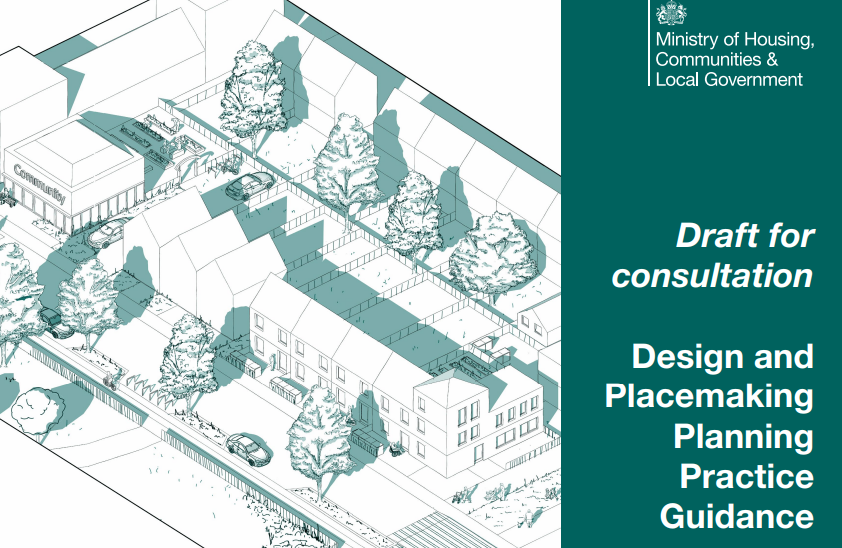
It’s split into seven chapters:
🏙️ Liveability – healthy mixed and integrated communities
☀️ Climate – Mitigating and adapting to change
🌳 Nature – Enhance and optimise
🚲 Movement – Developments should be accessible and easy to move around
🖊️ Built form – Compact and connected pattern of development
🍷 Public space – Safe, social and inclusive
🎨 Identity – Should be attractive and distinctive
As usual, I’m just interested in the Climate section, but the full document is available at the above link.
🔌 The Planning Guidance expects new developments to be designed for very low emission rates (which will be satisfactorily covered by the Future Homes Standard). Also to minimise operational energy and reduce embodied energy.
The mention of Embodied Energy, also known as the Whole Carbon Lifecycle of a building, is interesting... This is not currently a building regulation, which means local authorities would be allowed to target lifecycle in future Local Plans (based on NPPF draft Policy PM13. More info here: https://lnkd.in/eTkiYb5u )
🗑️ Section C2 of this Guidance talks about minimising mineral waste, reusing and refurbishing, following hashtag#CircularEconomy principles and reducing energy use during construction, design and disassembly of new buildings.
The rest of the Carbon section is (ironically) recycled from existing guidance...
🔺 Developers should consider the Energy Hierarchy, starting with passive design measures, moving on to an energy efficient specification, then add renewable technology and low carbon heating… again, FHS and the new Part L targets will deal with this at Building Regulation level.
☀️ And designing to mitigate overheating is also covered. Nothing new here either, as Approved Document Part O made this a requirement in 2021.
But, just because this document covers a lot of old ground, that doesn’t mean it isn’t a useful reference guide.
When the new NPPF is confirmed and published, this Planning Guidance will accompany it so councils can easily follow national guidance when deciding what is and isn’t acceptable to be built in their patch.


Comments